Daniss Jenkins settles into a steady backup role for the 5-1 start Pistons
Daniss Jenkins is Detroit's backup guard and he is healthy, with no spot on the injury report. He has played between 15 and 19 minutes in each of the Pistons' first five games, handing out at least four assists in four of them. The second-year guard out of St. John's is building on a 72-game rookie season.
By the Pistons Nightly Desk · updated 16 h ago01The story of the nightWho Daniss Jenkins is right nowDaniss Jenkins wears No.
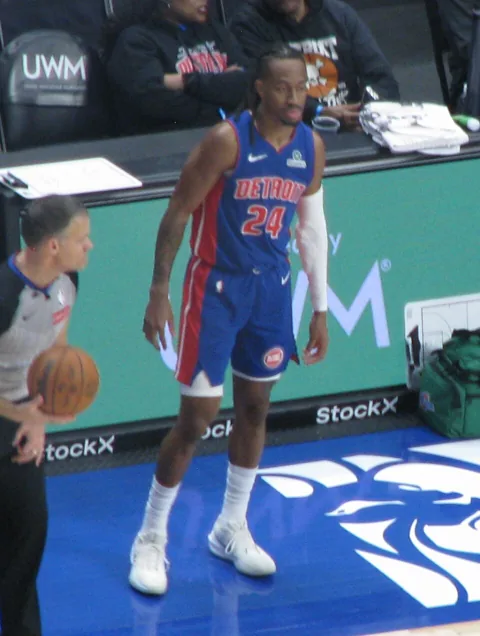
Daniss Jenkins wears No. 24 for the Detroit Pistons. He is a 6-4, 165-pound guard, 25 years old, in his second NBA season after coming out of St. John's. He is not on the injury report and has no injury history on file, which matters for a reserve guard whose job is to be available every night. His role is clear: run the second unit, keep the ball moving and take the open shot when it comes. Through five games this season he has done exactly that, logging somewhere between 15.3 and 18.2 minutes each night. The minutes are modest, but the consistency is the point. Detroit knows what it is getting when he checks in, and so far the Pistons have won four of the five games he has played.
02Last season's numbersJenkins played 72 games for Detroit last season, averaging 20.2 minutes.
Jenkins played 72 games for Detroit last season, averaging 20.2 minutes. He put up 9.3 points, 2.3 rebounds and 3.9 assists per game with 0.9 steals, 0.2 blocks and 1.6 turnovers. He shot 40.8 percent from the field, 37.4 percent from three and 83.2 percent from the line, good for a 52.5 true shooting percentage. His usage rate was 20.9 percent, a real number for a backup guard, and his plus-minus came in at a positive 2.9. The three-point and free-throw percentages are the two figures that stand out. A guard who makes 37.4 percent of his threes and 83.2 percent of his free throws can play off the ball when the starters are out there, and the assist rate shows he can run things when they sit.
03The first five games of 2026-27The scoring has been quiet so far, but the passing has not.
The scoring has been quiet so far, but the passing has not. Jenkins opened the season on October 5 against Phoenix with 5 points, 2 rebounds and 4 assists in 18.2 minutes in a Pistons win, and he was a plus-15 that night. He scored 12 points with 4 assists in 17.6 minutes in the October 10 loss to Washington, his best scoring game of the young season. Against Minnesota on October 14 he had 6 points, 3 rebounds and 4 assists in 15.9 minutes and finished plus-13. He followed that with 3 points and 5 assists in 16.8 minutes against Toronto on October 16, then 3 points, 2 rebounds and 3 assists in 15.3 minutes against Boston on October 20. Detroit won all three of those games. His plus-minus has been positive in every game so far.
04What the playoff series showedThe last five games of Jenkins' rookie year came in Detroit's May series against Cleveland, and his minutes jumped.
The last five games of Jenkins' rookie year came in Detroit's May series against Cleveland, and his minutes jumped. He played 18.2 minutes in the May 9 loss and 21.1 minutes in the May 11 loss, scoring 2 points in each. Then the series turned into a bigger test. He played 40.9 minutes on May 13 and scored 19 points with 3 assists in a loss. On May 15 he scored 15 points with 3 rebounds and 3 assists in 30.6 minutes, and Detroit won with him at plus-12. The series ended May 17 with a loss in which he scored 17 points and had 5 assists in 34.1 minutes. Three straight games of 15 or more points on a playoff stage is a data point Detroit's coaching staff did not have before May. It is the clearest sign he can carry more than a backup load.
05What to watchThe question for Jenkins this season is whether the scoring from those Cleveland games shows up in the regular…
The question for Jenkins this season is whether the scoring from those Cleveland games shows up in the regular season rotation. Right now his minutes sit in the mid-teens and his scoring sits between 3 and 12 points a night. The assists are steady, and the plus-minus says the Pistons play well when he is on the floor. The efficiency from last season, 37.4 percent from three and 83.2 percent from the line, is what keeps him on the court in close games. There are no rumors attached to his name and nothing on the injury report. For a 25-year-old backup guard on a team that has started 4-1 in his appearances, that is a comfortable place to be. The next step is turning the 4-and-5 assist nights into nights where the points come too.
 Jenkins9.3 ppg
 Smart9.3 ppg